Signed in as:
filler@godaddy.com
Signed in as:
filler@godaddy.com

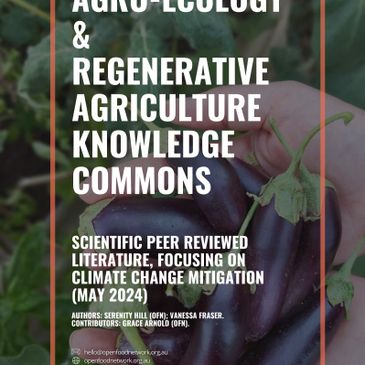
The Open Food Network have created an open source literature review which pulls together peer-reviewed data about the impacts of regenerative agriculture.
If you’ve ever wondered ‘Can regenerative agriculture stop climate change?’ or ‘How much carbon can soil sequester?’ you can find the up-to-date peer-reviewed research on those questions in this resource.
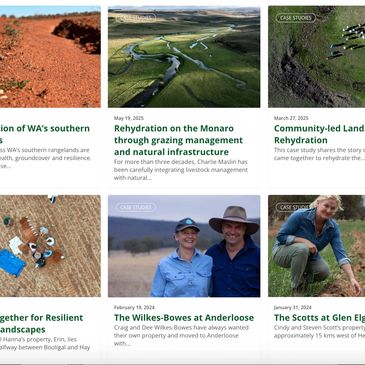
Covering livestock, grains and horticulture, each Soils for Life case study is an interwoven story supported by evidence of how land management innovators are achieving resilient, productive outcomes through regenerative landscape management practices.
Curated guides covering:

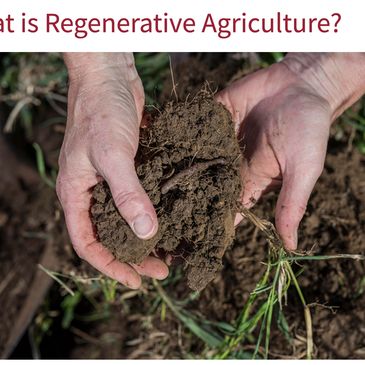
Developed by the California State University, a helpful summary of Regenerative Agriculture and the types of practices that improve soil health.
Alan Savory – Savory Institute
Will Harris – Whiteoak Pastures
Greg Judy – “No Risk Ranching”, “Comeback Farms”
Graeme Hand- Hand for the Land
Nicole Masters – “For the Love of Soil”
Gabe Brown – “Dirt To Soil”
Ray Archuleta – Soil Health, Cover Crops
Paul Stamets- All things Fungi, 6 Ways Mushrooms Can Save the World
Jeff Lowenfels – “Teaming with Microbes/Nutrients/Fungi”
David Montgomery- “Dirt: The Erosion of Civilization”
Alan Savory – Savory Institute
Jerry Brunetti – “The Farm as Ecosystem”
Mark Shepard- “Restoration Agriculture”
Michael Philips- “The Holistic Orchard, Mycorrhizal Planet”
Richard Perkins – “Regenerative Agriculture”
Food Connect Foundation Resources
Michael Pollan- “The Omnivore’s Dilemma”
Lierre Keith – “The Vegetarian Myth”
Diana Rodgers – “Sacred Cow”
Jo Robinson – “Eat Wild”
Sandor Katz – Fermenting Books
Natasha Campbell-McBride – “Gut and Psychology Syndrome”
Joshua Gilbert - "Australia's Agricultural Identity - an Aboriginal yarn"
Alan Savory
Gabe Brown
Treating the Farm As an Ecosystem Part 1
Treating the Farm as an Ecosystem Part 3
Dr. Christine Jones and Nicole Masters
Building Topsoil Through Liquid Carbon pathway
Bottom Line Benefits of Building Resilience
Implementing Regenerative Ag Practices to Improve Soil Health
Darren Doherty
John Kempf
Changing Agronomy with Biology
Podcast- Advancing Eco Agriculture
Greg Judy
Allen Williams
Please reach us at info@rffa.org.au if you cannot find an answer to your question.
Holistic Management helps farmers understand how nature functions, and which management tool or combination of tools will help them work with the complexity of nature and enable it to thrive. HM is a management process that evolves with your business over time. The 'how to' manage holistically comes from the Holistic Context, decision-making tool and annual profit plan. Specifically for farmers, the 'how to' is found in the land planning and grazing and/or cropping planning. Monitoring and review is built into the planning and decision-making as a critical step.
Contact the Australian Holistic Management Cooperative for upcoming courses and field days.
For generations, RCS has been inspired to work with Aussie producers to create the best possible future for our community. Together they are striving towards an agricultural industry comprised of:
Contact RCS for more information on their course offerings.
We acknowledge the Traditional Owners of the land on which we operate and pay our respects to Elders past and present. We recognise their continuing connection to land, waters, and culture, and honour their deep knowledge and storytelling traditions that have shaped this land for generations.
© Regenerative Food & Farming Alliance 2025
We use cookies to analyze website traffic and optimize your website experience. By accepting our use of cookies, your data will be aggregated with all other user data.